


Why some hair supplements are ineffective
Walk into any pharmacy or browse online for five minutes and you’ll find hundreds of hair loss supplements all promising thicker, stronger, healthier hair. The language is confident, the packaging is clean, and the claims are often just restrained enough to pass compliance checks. Yet, for a large number of people, the experience is the same: a few weeks of optimism, a couple of months of uncertainty, and eventually, quiet disappointment. By 2026, the market has grown more sophisticated, but the underlying problem hasn’t changed. Most hair loss supplements still fail—not always because they’re useless, but because they’re built on flawed assumptions, weak formulations, and unrealistic expectations.
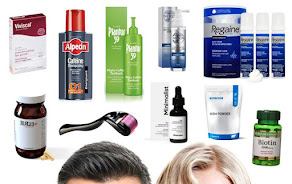
The first issue lies in the industry’s long-standing reliance on biotin as a headline ingredient. Biotin has become synonymous with hair health, largely because it plays a role in keratin production. The problem is that true biotin deficiency is rare. For the average person, adding more biotin does not suddenly trigger hair regrowth. What it often does instead is create a false sense of reassurance. A supplement can contain a high dose of biotin, display it prominently on the label, and still do very little for someone experiencing pattern hair loss, hormonal thinning, or stress-related shedding. The result is a product that looks effective on paper but fails to address the actual biological drivers of hair loss.
Closely tied to this is the issue of underdosing. Many supplements include a wide range of ingredients—saw palmetto, zinc, marine extracts, amino acids—but in quantities too small to make a measurable difference. This is rarely obvious to the consumer. Labels list ingredients, not effectiveness. A formula might contain ten or fifteen components, creating the impression of a comprehensive solution, yet each one sits below the threshold required to influence hair growth cycles. It’s a quiet compromise between cost and marketing. By spreading small amounts across many ingredients, brands can claim breadth without delivering depth.
Another major reason supplements fail is a misunderstanding of what causes hair loss in the first place. Hair thinning is not a single-condition problem. It can be driven by genetics, hormones, inflammation, nutrient deficiencies, stress, or a combination of these factors. Many products take a one-dimensional approach, often focusing solely on “hair nourishment” without addressing hormonal influences like DHT, which plays a central role in male and female pattern hair loss. Others lean too heavily on botanical extracts without considering how they interact with the body over time. When a supplement targets the wrong mechanism, or only part of the picture, results are inevitably limited.
Absorption is another overlooked factor. Even when a supplement contains well-chosen ingredients at reasonable doses, there is no guarantee the body will use them efficiently. Nutrient absorption depends on digestive health, timing, formulation, and even the presence of other compounds that enhance or inhibit uptake. Capsules filled with dry powder may pass through the system with minimal impact if the body cannot break them down effectively. In this sense, a supplement’s formulation is just as important as its ingredient list, yet it is rarely discussed in marketing or reviews.
Then there is the issue of time. Hair growth is slow, cyclical, and often unpredictable. The hair follicle operates in phases, and any meaningful change takes months to become visible. Many users abandon a supplement too early, expecting visible regrowth within a few weeks. This expectation is reinforced by marketing that implies rapid transformation. In reality, the early stages of improvement may be internal—reduced shedding, stronger strands, a healthier scalp environment—none of which are immediately obvious in the mirror. When progress doesn’t match expectation, the supplement is labelled ineffective, even if it was beginning to work.

Consistency also plays a role. Supplements are not one-time interventions. They require daily use, often alongside lifestyle adjustments, to create a cumulative effect. Missing doses, switching products frequently, or combining multiple supplements without a clear strategy can disrupt any potential benefit. The market encourages experimentation, but hair biology rewards consistency. Without it, even a well-formulated product may appear to fail.
Another layer to consider is the gap between marketing claims and real-world application. Regulations have tightened over the years, but brands still operate within a space that allows for suggestive language. Words like “supports,” “helps maintain,” and “contributes to” create a sense of effectiveness without guaranteeing outcomes. Consumers interpret these phrases more optimistically than they are intended. When results fall short, the perception is failure, even if the product performed within its modest design.
Price is often assumed to be an indicator of quality, but this is not always the case. Some supplements are inexpensive because they use basic formulations with minimal active ingredients. Others are expensive because they invest heavily in branding, packaging, and distribution rather than formulation. The true cost of producing a supplement is often far lower than its retail price, and without transparency, it is difficult for consumers to distinguish between genuine value and inflated positioning. This disconnect contributes to disappointment, as expectations rise with price.
What becomes clear in 2026 is that the failure of most hair loss supplements is not due to a single flaw but a combination of compromises. Weak formulations, misunderstood biology, poor absorption, unrealistic timelines, and inconsistent use all converge to create underwhelming outcomes. The market is crowded, but genuine effectiveness remains relatively rare.
For consumers, the takeaway is not to dismiss supplements entirely but to approach them with a more critical eye. Understanding what drives hair loss, looking beyond headline ingredients, and setting realistic expectations can dramatically change the experience. A supplement should not be judged solely by its label or its promises, but by how well it aligns with the underlying causes of hair thinning and how consistently it is used over time.
For the industry, the direction is clear. As awareness grows, superficial formulations will struggle to maintain credibility. Products that combine meaningful ingredient selection, appropriate dosing, and a clear understanding of hair biology will stand apart. The conversation is shifting from quick fixes to long-term strategies, and supplements that fail to evolve with this shift will continue to disappoint.
In the end, most hair loss supplements fail not because the idea itself is flawed, but because execution rarely matches expectation. When the gap between the two narrows, results improve. Until then, the cycle of hope and frustration is likely to continue, repeating itself with each new bottle, each new formula, and each new promise of thicker, stronger hair.
Some modern formulations have started addressing these gaps more effectively, combining broader ingredient coverage with more considered dosing strategies. Products like HR23+ are examples of this newer approach, focusing on multi-pathway support rather than relying on a single headline ingredient.



Post a Comment