LATEST NEWS
Showing posts with label hair loss treatments. Show all posts

How Hair Loss Treatments Have Evolved


How have treatments for baldness evolved over the years?


Most men suffer from baldness in their thirties, but with the help of some potent treatments, many of these men have managed to slow down the pattern of hair fall. A slightly lower percentage of women suffer from hair loss at the same age (around 40%), but female baldness appears to be easier to treat.

Unfortunately for all hair loss sufferers, there is no cure for baldness, and there doesn't seem to be anything in the pipeline in the near future. So, what is the next best thing? And without a cure, how has the hair loss treatment market developed and evolved over the years?

Here is a the step-by-step developments of the hair loss treatment industry, and how it has evolved to become what it is today...

Minoxidil: A Topical Treatment for Thinning Hair


Minoxidil was developed in the late 1950s by the Upjohn Company to treat ulcers. In trials using dogs, the compound did not cure ulcers, but proved to be a powerful vasodilator. Upjohn synthesized over 200 variations of the compound, including the one it developed in 1963 and named minoxidil. These studies resulted in FDA approving minoxidil (with the trade name 'Loniten') in the form of oral tablets to treat high blood pressure in 1979.


Upjohn conducted two further studies, the second study showing unexpected side-effects of hair growth. The possibility of using minoxidil for treating hair loss was then considered. The effect of minoxidil on hair loss prevention was so clear that in the 1980s physicians were prescribing Loniten off-label to their balding patients.

In August, 1988, the FDA finally approved the drug for treating baldness in men under the trade name 'Rogaine'. 39% of the men studied had moderate to dense hair growth on the crown of the head. In 1991, Upjohn made the product available for women.

In 1998, a 5% formulation of minoxidil was approved for non-prescription sale by the FDA. This is still the only topical product that is FDA-approved for androgenic hair loss. This does come with minor risks of side-effects such as headaches, weight gain, acne, vomiting, and dizziness.

Although it isn't for everyone, minoxidil is still regarded as the most revolutionary topical hair loss treatment. The results are minor, but this foam/liquid will work best when tackling thinning hair at its early stages.

Finasteride: A Pill to Stop Male Pattern Baldness


Finasteride (labelled as Propecia) is a prescription-only oral pill that treats male pattern baldness.

After studies from the 1940s and 1950s analysing the development of male pattern baldness, it was 1974 that saw birth defects as a potential clue to solving the problem of male hair loss. A research group on specific individuals found that genetic mutation at birth was causing deficiency of the 5α-reductase enzyme and male hormone dihydrotestosterone (DHT), which was found to have been the etiology behind abnormalities in male sexual development.

Upon maturation, these individuals were observed to have smaller prostates which were underdeveloped, and were also observed to lack incidence of male pattern baldness.


It was found that decreased levels of DHT led to the development of smaller prostates. Dr. Vagelos then sought to create a drug which could mimic the condition found in these individuals to treat men who were suffering from benign prostatic hyperplasia.

Finasteride was developed under the code name MK-906. In 1992, finasteride (5 mg) was approved by the U.S. Food and Drug Administration (FDA) for treatment of BPH, which Merck marketed under the brand name Proscar. In 1997, Merck was successful in obtaining FDA approval for a second indication of finasteride (1 mg) for treatment of MPB, which was marketed under the brand name Propecia.

Propecia became one of the most popular treatments from 2000-2010, but has since seen a wane in popularity, due to the common side-effects associated with the pill. These harsh side-effects can include a low libido, erectile dysfunction, severe skin rash, and even mental health problems. Most men, are now seeking safer alternatives.

The Potassium Channel Theory


In 2009 Thomas Whitfield founded the company Oxford Biolabs, and in 2011 produced its first product, TRX2. In January 2014 the UK Advertising Standards Authority upheld a complaint against TRX2 and Oxford Biolabs, citing that advertisements that the company had run for TRX2 were misleading and in breach of EU advertising codes. The company agreed and changed their advertising in line with the code of conduct.


TRX2® hoped to revolutionise the industry with their theory of potassium channels. Potassium ion channels have been implicated in a vast array of diseases ranging from hepatitis C to diabetes. These small pore-forming protein structures control the transport of potassium ions across the hair follicle’s cell membrane and are essential for retaining the follicle’s full biological activity and function. The recent discovery that potassium ion channels exist within the dermal papilla cells of human hair follicles provided a novel therapeutic target for researchers.

Scientists have demonstrated that as people experience hair loss the function of potassium channels within hair follicles diminishes. The effect is impaired membrane potential and interrupted ion transportation across the hair follicle's cellular membranes – resulting in shrinking follicles and thinning hair.

According to Oxford Biolabs, by restoring the functionality of potassium ion channels that have broken down over time, the proprietary TRX2® formula helps to maintain normal, healthy hair on a molecular level.

After much early anticipation, the reviews for TRX2 have waned over the past couple of years. In most cases, it appears this product does not provide an effective solution for hair loss.

DHT Blocker: Saw Palmetto


Serenoa repens, commonly known as saw palmetto, is the sole species currently classified in the genus Serenoa. It is a small palm, growing to a maximum height around 7–10 ft. It is endemic to the subtropical South-eastern United States, most commonly along the south Atlantic and Gulf Coastal plains and sand hills. It grows in clumps or dense thickets in sandy coastal areas, and as undergrowth in pine woods or hardwood hammocks.

Saw Palmetto extract has been researched into treatment for people with prostate cancer. However, according to the American Cancer Society, "available scientific studies do not support claims that saw palmetto can prevent or treat prostate cancer in humans".

Although very promising so far, more tests are needed to confirm exactly how effective saw palmetto is for blocking DHT. An extract of saw palmetto berries may block 5-alpha-reductase, an enzyme that converts testosterone to DHT. DHT is the molecule responsible for hair loss and also is involved in the enlargement of the prostate.

One study showed saw palmetto’s ability to treat an enlarged prostate. Researchers hope it can play a key role in slowing down and even preventing hair loss entirely. In fact, the components of saw palmetto that block the enzyme work in a similar way as synthetic ingredients in prescription medication for hair loss.

Research is still limited on saw palmetto’s efficacy in treating hair loss, but the vast majority of multi-vitamin hair supplements contain this potent extract. A viable treatment for hair loss can be formed when saw palmetto is mixed with other potent ingredients, such as Biotin, Zinc, Vitamin C, and Folic Acid.

Multi-Vitamin Hair Supplements


Multi-vitamin supplements are becoming the most popular choice of treatment for baldness, and this is down to two main reasons: Firstly, they are safe from side-effects, and secondly, they are effective.

There are some good multi-vitamin supplements on the market that contain a key blend of hair growth ingredients and DHT blocking properties, such as Viviscal, HR23+ and Nutrafol.  Saw palmetto can halt thinning when taken on its own, but multi-vitamin supplements can halt the process completely.

The best multi-vitamin supplements will also contain key hair beneficiary ingredients such as Biotin, Folic Acid, Choline, Ginkgo Biloba, and Zinc.  All shown to help prevent hair fall and increase hair growth.

Main article body by K. Ashton.

hr23+ ad for hair loss


What is the Best Type of Treatment for Baldness?

How to effectively treat hair loss and thinning hair


There are literally thousands of treatments and products for hair loss and baldness, varying from prescription drugs to surgical procedures.  We've covered and reviewed a wide range of these treatments throughout the Hair Loss Review Centre, but we now want to take a closer look at the three main types of treatments for hair loss.

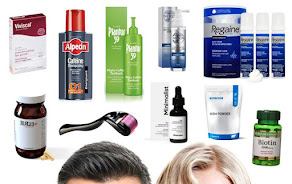
The three most popular 'treatments' for baldness are shampoos/conditioners, topical serums/foams and orally consumed supplements.  The reason these are the three most popular forms of treatments is due to the fact they are affordable, safe to use, and easily accessible.  Although some of these products can be highly effective for combating thinning hair, not all of them are necessarily effective.

Here, we take a look through these three popular types of hair products and evaluate which one is likely to be the most effective for treating hair loss and thinning hair...

hair loss treatments

Hair Growth Shampoos


The oldest form of hair loss treatment is the shampoo.  Hair 'growth' shampoos have been in our faces since advertising started, and even today, without FDA approval, we see a broad range of brands such as Alpecin and Head & Shoulders pumping out ads that tell us how their shampoos can give us thicker, fuller, stronger hair growth.  Advertising standards has cracked down on false claims in recent years, but there are still many brands that are finding ways around it.

In truth, shampoos will not solve the problem of baldness.  Some shampoos can be more effective than others, but you would need to let a formula settle into the scalp for a certain period of time for full effects.  Shampoos do not solve this issue because they need to be washed out within a couple of minutes of application.

Hair Growth Serums


This leads us on to topical solutions for hair fall.  Unlike the shampoo, with most serums and foams, you are required to apply the solution onto the scalp and then leave in for four to five hours.  This is of greater benefit than the shampoo, because you are allowing the ingredients to settle into the scalp over a long period of time.

There are some naturally formulated serums on the market than seem to be giving users positive results, but on the whole, there isn't a particular stand-out serum with an extremely high proven track record.  Developers still have a lot of work to do in order to find an effective topical treatment for alopecia.

Hair Growth Supplements


And finally, we come to the fastest growing and most popular form of natural hair loss treatment, the supplement.  Multi-vitamin hair supplements like Nutrafol, Viviscal and HR23+, are becoming major players in the market, and this trend does not look like ending any time soon.

"People are experiencing really positive results from using hair health supplements, and even though they do not cure baldness, there are a few really good supplements out there that seem to be slowing down and even halting the process of thinning hair." - Specialist, A. Aziz.

Many of us lack the sufficient nutrients and minerals to generate and maintain healthy hair growth. That's where vitamins come into play.  A good multi-vitamin hair supplement gives us the daily intake of vitamins and minerals required for healthy hair.  Some products of this nature can even stimulate new hair growth.   Multi-vitamin hair supplements also offer a safer alternative to the potentially damaging prescription drugs such as Finasteride.
 

To Conclude... 


Natural treatments should be strongly considered if you're looking to avoid the harsh FDA approved hair treatment drugs like Finasteride and Minoxidil.  A shampoo, serum or supplement will not cure hair loss, but if you suffer from early stages of balding and thinning hair, then these are the types of products you should be trying, in order to slow down and halt the process.

For the best results, we would recommend you taking a good multi-vitamin hair supplement with the addition of Biotin, Zinc, Saw Palmetto, and Vitamin C (make sure you are not allergic to any of the ingredients), coupled with a potent serum with similar ingredients that can potentially work in conjunction with the supplement.  Shampoos are unlikely to have any effect on your hair loss, but using an Argan Oil based formula certainly won't do your hair any harm.

Ad.
hair growth supplement


How To Treat Hair Loss


How do men and women tackle hair loss and thinning hair?


Hair loss affects over half of men and just over a third of women, by the age of 40.  As from 2017, the hair treatment sector is worth an estimated £1.8 billion, and is set to rise to over £5 billion but 2022.  Yet with all the money involved, there is still no known cure for alopecia.

So, how do most people treat pattern baldness?  Can it be prevented, and how effective are the treatments on the market?  Here, we look at the options that men and women are taking in order to try and treat hair loss and thinning hair.


Hair Topical Liquids

Topical liquids such as serums, lotions, foams and shampoos have always been popular choices of treatment for men, and particularly for women.  Dating back to the 80s and 90s, the topical liquids came in the form of Chinese 'Herbal Medicines', which promised the world, but delivered very little in the way of results.  The most common choice of topical liquid is the FDA approved treatment, Minoxidil, which is famously branded as Regaine/Rogaine.


Hair Pills and Vitamins

The hair loss treatment pill is relatively new in the world of alopecia treatments. The FDA approved drug, Finasteride (branded as Propecia), has been a popular choice for men trying to halt male pattern baldness, but for most men who are looking to avoid the potential side-effects that come with this drug, they tend to opt for natural hair health supplements such as Nutrafol and HR23+.  Hair supplements have also become very popular with women who suffer from balding during and after pregnancy.  Results will vary with each individual, but hair supplements can be very beneficial for hair loss sufferers.

Hair Laser Comb/Brush

Zapping your hair with infrared rays won't magically regrow your hair, but they do claim they can stimulate weakened follicles.  There is not much hard evidence to back the claim of these types of devices, and their popularity has decreased over the past few years since the emergence of hair supplements and topical solutions.

Hair Surgery

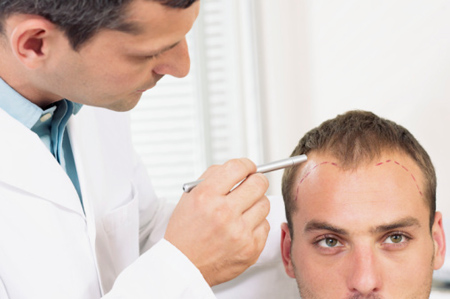
If we all had the money, hair surgery would probably be first on the list of things to do to try and tackle hair loss, but even hair transplantation is not guaranteed to work.  Many men (and women) who go down the hair transplant route, need regular 'top-up' visits, and are also put on strong medication in order for the surgical procedure to be effective in the long run. You might think hair surgery is the simple solution to tackling hair loss, but in reality it i everything but simple.


Copyright © 2014 Hair Loss Review Centre | Advice, Treatments, Causes & Solutions. Designed by OddThemes