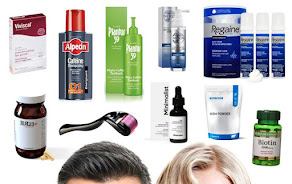
5 Must-Have Hair Growth Essentials for Autumn 2026
The products we'd have in our hair-loss routine as seasonal shedding begins
Autumn isn't necessarily kind to your hair.
If you've noticed more strands in the shower, on your pillow or tangled in your brush during late summer and early autumn, you may not be imagining it. Human hair follicles appear to show a degree of seasonal variation, with research finding a peak in shedding around August and September and fewer follicles remaining in the active growth phase at this point in the year.
For somebody already dealing with thinning hair, that extra shedding can be unsettling.
It also makes September a sensible time to tidy up your hair-loss routine. Not by throwing ten different treatments at your scalp, but by concentrating on a handful of products that perform different jobs.
Here are our five hair growth essentials for autumn.
1. HR23+ Hair Supplement
Best for: daily nutritional and botanical hair support
A good hair-loss routine starts from within, particularly if you're noticing increased shedding rather than simply trying to make your existing hair look thicker.
HR23+ is a multi-ingredient hair supplement designed for men and women experiencing thinning and excessive hair fall. Rather than relying on a single fashionable ingredient, the idea is to provide a broad combination of vitamins, minerals, amino acids and botanical ingredients associated with normal hair maintenance and growth.
That makes autumn a particularly logical time to use it.
Seasonal shedding is part of the natural hair cycle, so you aren't going to stop every telogen hair from falling simply by taking a supplement. What you can do is make sure nutritional support isn't the weak link while your follicles move through their normal cycle.
We've also consistently rated HR23+ highly because it approaches hair loss from several angles rather than simply providing huge doses of biotin and calling itself a hair supplement.
How we'd use it: Daily and consistently. Hair supplements make little sense as something you take sporadically whenever shedding looks worse.
Autumn rating: 5/5
2. HR23+ Copper Tripeptide-1 Hair Growth Serum with GHK-Cu + Saw Palmetto
Best for: targeted, non-minoxidil scalp support
This is the topical product we'd pair with the supplement.
Copper Tripeptide-1 — commonly known as GHK-Cu — is a naturally occurring copper-binding peptide that has attracted considerable interest in skin and hair research.
There are plausible reasons for its use around the follicle, particularly because of what is known about copper peptides and tissue signalling, repair and the skin environment. But it's important not to oversell the science: we still don't have a good randomised human trial showing that GHK-Cu alone regrows scalp hair.
The other interesting component is saw palmetto, which is widely used in non-prescription hair-loss formulations because of its potential anti-androgenic properties.
What we particularly like about this type of serum for autumn is that it offers a non-minoxidil topical option. There is no requirement for every hair-loss routine to revolve around medication.
Applied directly to thinning areas, the serum gives you a targeted second part to the routine:
HR23+ supplement from within + Copper Tripeptide-1/Saw Palmetto serum from the outside.
Just keep expectations sensible. Copper peptides are promising rather than clinically proven hair-regrowth drugs.
Autumn rating: 4.5/5
3. OGX Thick & Full+ Biotin & Collagen Shampoo
Best for: making fine autumn hair look thicker and fuller
Shampoo is where hair-loss marketing gets silly.
A shampoo isn't sitting on your scalp long enough to perform miracles, and we wouldn't buy one because it promises to "reactivate" follicles.
Instead, choose your shampoo according to what a shampoo can realistically do.
OGX Thick & Full+ Biotin & Collagen Shampoo contains biotin and hydrolysed collagen and is specifically formulated to create the appearance of thicker, fuller hair. The current UK formulation is also designed for volume and texture.
And that's exactly why we've included it.
When autumn shedding makes your hair look a little flatter than usual, cosmetic thickness matters. Something doesn't have to regrow a follicle to be useful to somebody with thinning hair.
A shampoo that leaves your remaining hair looking fuller can make an immediate visual difference while the slower parts of your routine do their work.
Autumn rating: 4/5
4. Rosemary Oil
Best for: simple topical scalp care
If you've spent five minutes on TikTok, you've probably already been told rosemary oil is the answer to baldness.
It isn't.
But once you strip away the social-media hype, rosemary remains one of the more interesting natural ingredients used in hair care.
For autumn, we like it because it's inexpensive, easy to incorporate into a scalp routine and gives people who don't want medication another topical option.
We'd generally favour a properly formulated rosemary scalp oil or serum rather than dropping neat rosemary essential oil directly onto your head. More isn't better, and essential oils can irritate sensitive skin.
Use it consistently and massage it gently into the areas where you're experiencing thinning.
Just don't expect three weeks of rosemary oil to suddenly produce a new hairline. Hair biology doesn't move that quickly.
Autumn rating: 4/5
5. Omega-3 Fish Oil
Best for: nutritional support beyond the usual hair vitamins
This is probably the wildcard on our list.
Omega-3 isn't normally the first thing people associate with hair loss, but there's enough interesting research to warrant its inclusion.
One six-month randomised study involving 120 women tested supplementation containing omega-3 and omega-6 fatty acids alongside antioxidants. The supplemented group showed improvements in hair density and a reduction in the proportion of telogen hairs compared with controls. It's worth noting that this was a combination supplement, so the results cannot be attributed to fish oil alone.
That's an important distinction.
We're not suggesting fish oil is a hair-loss treatment. We see a quality omega-3 supplement as an additional nutritional component rather than the centrepiece of the routine.
If you already take omega-3 for general dietary reasons, its potential hair benefits are a welcome bonus.
Autumn rating: 3.5/5
What About Minoxidil During Autumn?
Here's where we'd be a little cautious.
Minoxidil is one of the most established treatments available for pattern hair loss, so we're certainly not going to tell somebody who is getting good results from it to suddenly stop because September has arrived.
But starting minoxidil during a period when you're already shedding heavily can be psychologically difficult.
An initial increase in shedding after beginning topical minoxidil is real and documented. One recent study recorded a temporary increase during the first 12 weeks, while UK prescribing information notes that increased shedding can occur after treatment begins as follicles transition through the hair cycle.
Now combine that with somebody who is already staring anxiously at extra autumn hairs in the shower.
Not ideal.
So if you're experiencing an unusually heavy seasonal shed and considering minoxidil for the first time, we'd suggest understanding what's causing your hair loss and reading up properly on the potential initial shedding phase before jumping in.
If you're already using minoxidil successfully, keep to your established treatment unless the clinician overseeing it advises otherwise. Autumn isn't a reason to discontinue an effective treatment.
Two Autumn Extras Worth Adding
Our five essentials are enough for a perfectly respectable routine, but there are two inexpensive extras we'd consider.
A derma roller
Microneedling is one of the more interesting physical approaches to hair loss, particularly when used alongside established treatments.
You don't need to attack your scalp with it. Sensible, hygienic microneedling is the aim. If you have longer hair, you may actually find a derma stamp easier because there's less opportunity for hair to become tangled around a roller.
A scalp massage shower brush
Possibly the cheapest addition to this entire routine.
A soft silicone scalp brush helps work shampoo through the scalp and gives you a convenient way of incorporating regular scalp massage whenever you shower.
Don't scrub.
The objective isn't to exfoliate your scalp into submission. Use gentle circular movements and treat it as a couple of minutes of scalp stimulation while washing your hair.
Our Ideal Autumn Hair Loss Routine
You really don't need to make this complicated.
Morning: HR23+ supplement.
Hair-wash days: OGX Biotin & Collagen Shampoo + gentle scalp massage brush.
Topical routine: HR23+ Copper Tripeptide-1 + GHK-Cu + Saw Palmetto Serum, according to the product directions.
Alternative/additional topical: Rosemary oil on separate occasions where appropriate.
With food: Omega-3 fish oil.
Optional: Microneedling as part of a properly spaced, hygienic routine.
And then comes the ingredient nobody wants to buy:
time.
Hair grows slowly. Constantly switching products because you had a bad shedding week makes it almost impossible to work out what's helping.
Is Autumn Hair Loss Actually Real?
To an extent, yes.
One of the classic studies of seasonal human hair growth followed participants for 18 months. The proportion of scalp follicles in the active anagen phase peaked in March before falling to its lowest point in September. Hair shedding peaked around August/September.
That doesn't mean everybody suddenly develops hair loss every autumn.
It means there appears to be a seasonal component to the normal human hair cycle, which may make shedding more noticeable at this time of year.
If you're already prone to androgenetic alopecia, telogen effluvium or generally fine hair, you're probably going to notice those extra strands far more than somebody with extremely dense hair.
And that's really the point of an autumn hair routine.
Don't panic because you're seeing more hair.
Don't start six aggressive treatments at once.
And don't expect a shampoo to cure genetic hair loss.
Give your follicles good nutritional support, keep your scalp in good condition, use sensible topical products, be gentle with the hair you have — and give the routine enough time to work.
Five products. Two optional extras. One straightforward autumn hair-loss routine.